Siding Damage Signs That May Point Beyond a Cosmetic Problem
Siding damage can signal trapped moisture, failing attachments, or wall damage when panels feel soft, shift, bulge, or show spreading stains. HomeRemodelBellevue.link checks the siding, flashing, trim, and exposed wall areas to determine whether repair or replacement fits.
Request an EstimateWhich Siding Damage Signs Need More Than Cosmetic Attention?
Siding damage needs more than cosmetic attention when the problem affects moisture control, panel stability, or the wall behind the siding.
Surface fading may only affect appearance. Soft panels, open seams, spreading stains, or loose attachments can point to moisture intrusion and wall sheathing damage. We trace the visible sign to its source before recommending siding repair or siding replacement.
Our team also checks whether installation errors, failed caulking, damaged flashing, or hidden rot are allowing water behind the cladding. You can learn more about our approach through Siding Installation.
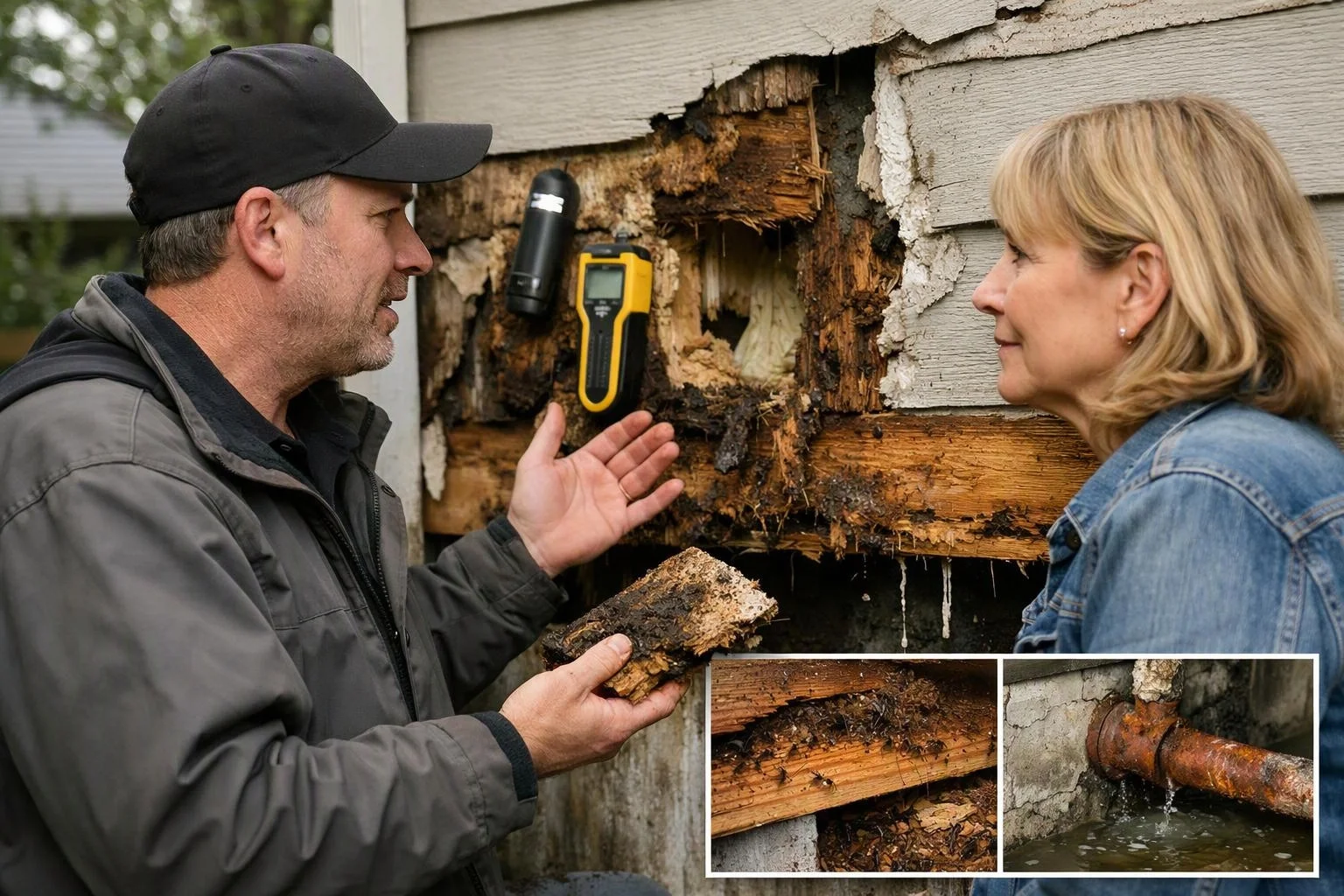
Use This Siding Damage Reference Table
This reference table connects common siding signs with likely concerns and practical next steps. A visible symptom doesn't prove the cause, so we confirm the condition during a siding inspection.
| Warning sign | What it may mean | Possible response |
|---|---|---|
| Cracked siding | Impact damage or weather exposure | Panel replacement and moisture check |
| Loose siding | Failed fasteners, wind damage, or poor movement space | Siding reattachment and attachment review |
| Warped siding | Trapped moisture, heat, or wall movement | Inspection behind the affected area |
| Rotted siding | Long-term moisture damage | Removal, repair, and replacement |
| Water stains | Water entry or poor drainage | Flashing and drainage review |
| Missing flashing | Weak water management | Flashing repair or installation |
| Mold and mildew | Surface moisture, drainage, or ventilation concerns | Moisture source review and safe cleaning plan |
| Granule loss | Finish wear or material aging | Material condition assessment |
We compare the affected area with nearby siding panels, seams, trim, and flashing. That review helps separate isolated damage from a broader home envelope problem.
What Siding Problems Should Homeowners Check First?
Homeowners should check unstable panels, open seams, soft areas, stains, and damage around openings before judging siding as cosmetic.
Look across the exterior walls and follow changes around joints, seams, windows, doors, and the roofline. Watch for signs that return after cleaning or continue spreading.
Do not press hard on areas that look swollen or rotten. We can assess exposed surfaces and determine whether the wall sheathing needs review.
Cracked or Split Siding Panels
Cracked siding and split siding can let water reach the layers behind the panel.
Impact damage may cause a local crack, while weather exposure can make older panels brittle. The repair scope depends on the panel design, surrounding condition, and available matching material.
We remove damaged material carefully, inspect the area, and complete panel replacement when the wall remains sound. We also check nearby joints for related damage.
Loose, Buckled, or Shifting Siding
Loose siding, buckled siding, or shifting panels can indicate failed fasteners, wind damage, or poor expansion space.
Siding needs room to move with temperature changes, but it must still stay aligned and attached. Improper attachment can create movement and open paths for water.
We check fasteners, panel connections, and the surrounding wall before completing siding reattachment. Damaged pieces may need replacement when they no longer hold their shape.
Warped, Bulging, or Soft Siding
Warped siding, bulging siding, or soft siding can signal trapped moisture behind the cladding.
Water may damage wall sheathing, insulation, or framing when it remains hidden. Rot can spread beyond the first visible panel.
We assess the panel, nearby seams, and exposed wall materials. Our repair plan addresses the moisture source before new siding covers the area.
Stains, Dark Patches, or Peeling Paint
Water stains, dark siding stains, and peeling paint can point to moisture entry or finish failure.
Stains often appear below openings, near rooflines, or around damaged flashing. Failed caulking can also allow water behind the siding.
We trace the stain, inspect flashing and caulking, and review drainage paths. Cleaning alone won't solve a repeated moisture source.
Mold, Mildew, or Algae on the Siding
Mold, mildew, and algae can develop where surface moisture remains on siding.
Blocked drainage, poor airflow, shade, and leaking details can keep the surface damp. Growth may be cosmetic, but recurring growth deserves a moisture review.
We look for drainage and ventilation concerns before recommending cleaning or replacement. Our team uses a repair plan that protects the siding surface.
Open Seams and Failed Caulking
Open siding seams and failed caulking can create direct paths for water intrusion.
Joints around windows and doors need careful detailing because those areas collect runoff. Cracked or separated sealant can expose the edges of the siding system.
We inspect the joint, remove failed material, and restore the affected detail when the surrounding materials remain sound. We also check for signs that water has reached the wall.
Missing, Bent, or Corroded Flashing
Missing flashing, bent flashing, or corrosion can weaken the home's water management system.
Kick-out flashing, window flashing, and door flashing guide water away from vulnerable joints. A damaged piece can send runoff behind the siding.
We inspect the flashing layout and connect it with the siding, trim, and drainage path. Our crew repairs or installs the needed detail before closing the wall.
Rotten Trim or Damaged Areas Around Openings
Rotted trim around windows, doors, or corner posts can show long-term moisture damage.
Window trim and door trim can absorb water when seals, flashing, or drainage details fail. Rot may continue behind the visible trim and affect nearby siding panels.
We inspect the opening, remove unsound material, and coordinate trim and replacement siding work. The repair must restore both appearance and wall protection.
Siding That Fades, Chalks, or Loses Its Finish
Faded siding, chalking, and finish failure often result from UV exposure and material aging.
Cosmetic damage does not always mean the panels have lost their protective function. Brittle surfaces, cracks, or widespread aging make replacement more practical.
We compare the finish with the panel condition and check for hidden damage. Our recommendation considers appearance, durability, and available matching materials.
How Can You Tell If Siding Has Water Damage?
Siding may have water damage when stains, soft areas, swelling, open joints, or damaged flashing appear together or keep returning.
We connect these signs to the roofline, windows, doors, seams, and lower wall edges. That approach helps us locate the source instead of covering the symptom.
When Does Siding Need Repair or Replacement?
Siding repair suits localized damage when surrounding materials remain sound, while replacement may fit widespread failure or unavailable matching materials.
Isolated cracks, loose panels, or small trim problems may support a targeted repair. Widespread warping, rot, finish failure, or repeated moisture entry can require a larger replacement area.
We check matching panels, wall protection, flashing, trim, and the condition behind the siding. Our recommendation follows the actual repair scope, not appearance alone.
What Changes the Cost of Siding Damage Repair?
Siding repair cost depends on the damaged area, material, access, hidden wall damage, and related flashing or trim work.
Material type can affect how panels connect and whether matching pieces remain available. Access can also change the labor needed to reach upper walls, corners, and roofline details.
We include the visible repair scope, wall sheathing review, flashing needs, trim work, and replacement area in our quote. Contact us so we can assess the property and prepare an exact quote for the work.
When Should You Call HomeRemodelBellevue.link?
Call HomeRemodelBellevue.link when siding damage may affect moisture control, wall protection, or safe access.
We handle the inspection and repair assessment so you don't have to test unstable siding yourself.
How We Check Siding Damage Before Recommending Work
Our siding inspection starts with a visual review of panels, seams, flashing, trim, and nearby wall areas.
We look for installation errors, moisture paths, movement, surface wear, and signs of hidden rot. When safe and appropriate, we review exposed wall sheathing without causing unnecessary damage.
We then explain the repair assessment in clear terms. The recommendation may involve siding repair, panel replacement, flashing work, trim work, or siding installation across a larger area.
Protect Your Home With the Right Siding Work
Siding repair and siding installation protect the exterior when they restore moisture control and sound wall coverage.
Cosmetic wear can wait when the siding remains stable and dry. Water stains, soft panels, open seams, damaged flashing, and rotted trim need closer attention.
HomeRemodelBellevue.link checks the full affected area and explains the next practical step. Request an assessment through our contact page.
Questions About Siding Damage Signs
Can damaged siding cause leaks?
Yes, damaged siding can cause leaks when cracks, open seams, failed caulking, or missing flashing let water behind the wall covering. HomeRemodelBellevue.link traces the water path and checks the related trim, flashing, and wall areas.
Can you replace only one damaged siding panel?
Yes, we can replace one damaged siding panel when the surrounding panels, fasteners, and wall materials remain sound. We also review color, profile, age, and matching availability before choosing panel replacement.
Does bubbling siding mean there is water behind it?
Not always, but bubbling siding can indicate trapped moisture, heat damage, poor attachment, or wall movement. We inspect the panel and nearby flashing before deciding whether repair or replacement fits.
Is faded siding a sign that it needs replacement?
Faded siding does not always need replacement when the panels remain stable, dry, and intact. We check for chalking, brittleness, cracks, moisture damage, and widespread finish failure before recommending work.
What should be checked behind damaged siding?
Damaged siding areas should be checked for wall sheathing damage, hidden rot, moisture paths, flashing problems, and failed trim or caulking. We inspect those connected components before closing the area with new siding.